
Looking for the best used electric vehicles that fit your lifestyle and budget. This guide brings together real world insights on range, battery health, charging, maintenance, and total ownership costs, so you can choose a pre owned EV with confidence. Whether you are focused on an affordable commuter, a family friendly crossover, or a feature packed luxury model, you will find data driven recommendations and helpful comparisons below.
You can explore curated lists of dependable models like Tesla Model 3, Chevrolet Bolt EV, Nissan Leaf, Hyundai Kona Electric, and Volkswagen ID.4, plus learn how to evaluate battery reports, charging options, and warranties. When you are ready to dig deeper, browse used inventory, research financing, or schedule service using the links provided throughout the page.
Every driver has a different routine, commute, and climate to consider. This resource explains how to match real world range to your daily miles, how Level 1, Level 2, and DC fast charging affect ownership, and how to estimate long term costs. You will also find links to research pages, inventory, trade valuations, and detailed model comparisons to make the process simpler and more transparent.
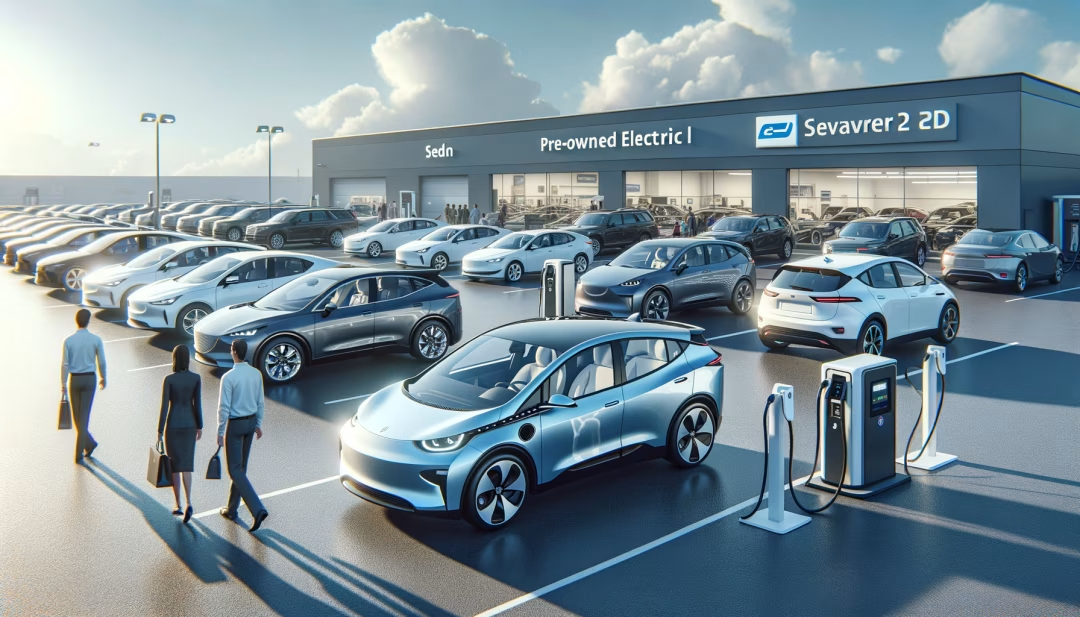
Used electric vehicles can deliver strong value because depreciation on the battery and technology is steeper in the first years, while ongoing costs for electricity and maintenance often remain low. Many EVs have fewer wear items than gas vehicles. There are no oil changes, fewer fluids, and brake wear is reduced thanks to regenerative braking. When you choose wisely, a used EV provides modern safety tech, quiet performance, quick acceleration, and low daily operating costs.
Below are stand out pre owned EVs known for solid owner feedback, widely available parts and service, and strong efficiency. Real world range varies by battery size, wheel selection, climate, and driving style. Always verify exact specs for the model year and trim you are considering.
Start by mapping your daily and weekly driving to the real world range that fits. For many drivers, 120 to 200 miles of verified range covers a normal week with home or workplace charging. If your routine includes frequent highway trips, winter conditions, hills, or towing a small trailer, aim for a larger battery or models known for stronger cold weather efficiency.
Battery state of health is a key part of a used EV purchase. Degradation is normal and depends on age, mileage, fast charging frequency, heat exposure, and storage habits. Many models provide a built in battery health indicator or support third party scan tools that read state of health. Ask for service records and recall history. Some brands offer improved battery packs as part of recall campaigns or warranty replacements in certain years, which can be a benefit.
Charging speed and convenience shape your daily experience. Level 1 uses a standard household outlet and typically adds a few miles of range per hour. It can work for short commutes. Level 2 uses a 240 volt circuit and adds roughly 20 to 40 miles of range per hour depending on the vehicle. DC fast charging is best for road trips and quick top ups. Verify the connector standard your EV uses and the networks nearby that support it.
Electricity is often cheaper per mile than gasoline, and EV maintenance is usually simpler. Tire rotations, cabin air filter changes, and brake fluid checks are the primary routine items. Some markets offer time of use electric rates that lower overnight charging costs. In addition, there may be state or utility rebates for home charger installation. Government programs can change, so review current incentives for used EV purchases in your area.
The best match depends on how you drive and what you want to spend. Here are popular directions to explore, based on value and availability in the used market.
A solid inspection builds confidence. In addition to a typical used vehicle check, pay attention to the charging system and high voltage components. Confirm that charging cables are included and operate on a charger. Check tire wear, especially on powerful EVs that can wear fronts or rears faster. Inspect underbody panels for scrapes and ensure coolant service intervals are documented if the model uses thermal management for the battery or motor systems.
Most EV maintenance revolves around inspections, cabin filters, tires, and brakes. Many models call for brake fluid checks at multi year intervals. Because regenerative braking reduces friction brake use, pads can last a long time if driving is gentle. However, road salt can still affect mechanical components in winter climates, so periodic cleaning and lubrication may be beneficial. For service scheduling, see schedule-service.
Financing terms for used EVs vary by lender and model year. Credit score, loan term, down payment, and mileage affect approval and rate. If you have a trade in, an accurate evaluation helps you understand total deal value. You can review guides on financing, trade in, and ownership costs through the resources below.
Explore inventory and research tools to compare trims, range, features, and estimated ownership costs. If a vehicle you like is not currently available, use related pages to see similar options and price ranges across body styles and brands.
Cold temperatures affect both battery chemistry and cabin heating needs, which lowers range. Look for trims with a heat pump when available, and use preconditioning while plugged in to warm the battery and cabin before departure. Winter tires can add confidence on snow but may shave a few miles of range. For drivers in cold regions, budget an extra range margin and consider all wheel drive models where appropriate.
A thorough test drive should include surface streets and highways. Monitor energy consumption, evaluate one pedal driving or regenerative settings, and verify charging functions. Pair your phone, check driver assist features, confirm cargo practicality, and ensure the seating position feels comfortable over at least 20 to 30 minutes. Review any vehicle history reports and service documentation to complete your evaluation. For an in person visit, see locations and for a time on the calendar use schedule-a-test-drive.
Choosing among the best used electric vehicles comes down to aligning your driving needs with verified range, charging access, battery health, warranty status, and long term costs. With the right fit, a pre owned EV can be smooth, quiet, and cost effective. Use the research links to compare models, review financing options, and plan a maintenance schedule. If questions come up, browse the blog or reach the team through the contact page.

